
Why is the use of drones in warfare so attractive? According to Hugh Gusterson, author of Drone: Remote Warfare Control, there are four main reasons.
- They are the best tools for reconnaissance
- They can project power without projecting vulnerability
- They are cheap
- They are super precise
Reconnaissance
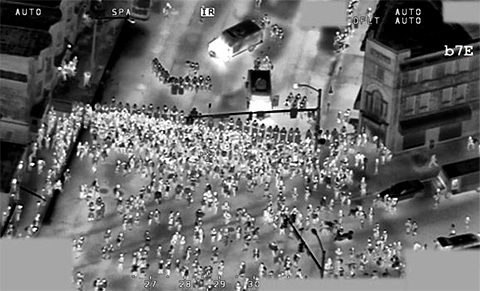
Gathering information is one of the most effective ways to gain power over your enemy. While satellites and manned aircraft can conduct fly overs of certain areas of interest, they cannot stay in the same place for an extended period of time. Drones, on the other hand, can hover over the same location for over a day, surveying who enters and exits buildings and observing all action happening in one area.
Vulnerability
Unlike manned aircraft, drone pilots are not inside the drone while operating it, but on the ground in a different region operating it from a protected and enclosed space. Using drones allows forces to have a forward presence in the air without the risk of losing someone being shot down in an aircraft.
This not only benefits operators, but politicians as well. War without American casualties will most likely have less American opposition. It is politically advantageous for politicians to support drone warfare for this reason.
Price
While drones aren’t “cheap,” they are definitely cheaper than conventional aircraft. According to Gusterson, “…training drone operator costs less than 10% of what it costs to train a fast-jet pilot” (Gusterson, 23). Not only is the training cheaper, but the drone itself is a lot cheaper than other aircraft.
Reaper drone cost: $22 million
F-16 cost: $47 million
Precision
No ground force can match the precision of the laser-guided munition capability of drones. Not only is the technology alone very precise, but the aircraft can linger until it has the perfect shot. The New York Times has referred to the drone’s capabilities as “pinpoint killing.”
Additionally, Gusterson describes how President Barack Obama liked the idea of using drones to pick off dangerous terrorists few at a time without endangering American lives or resulting to the bloodshed of conventional war.

Thoughts?
From a military standpoint, there seems to be no negatives to implementing drones into American Warfare. But what are the negatives? How does it affect the issue of privacy for those who are under the drones of surveillance? Is there any moral opposition to using technology to fight our wars?
Source: Gusterson, Hugh.Drone – Remote Control Warfare. Mit Press Ltd, 2017.



 Annalee's Ideas About Science and Global Politics